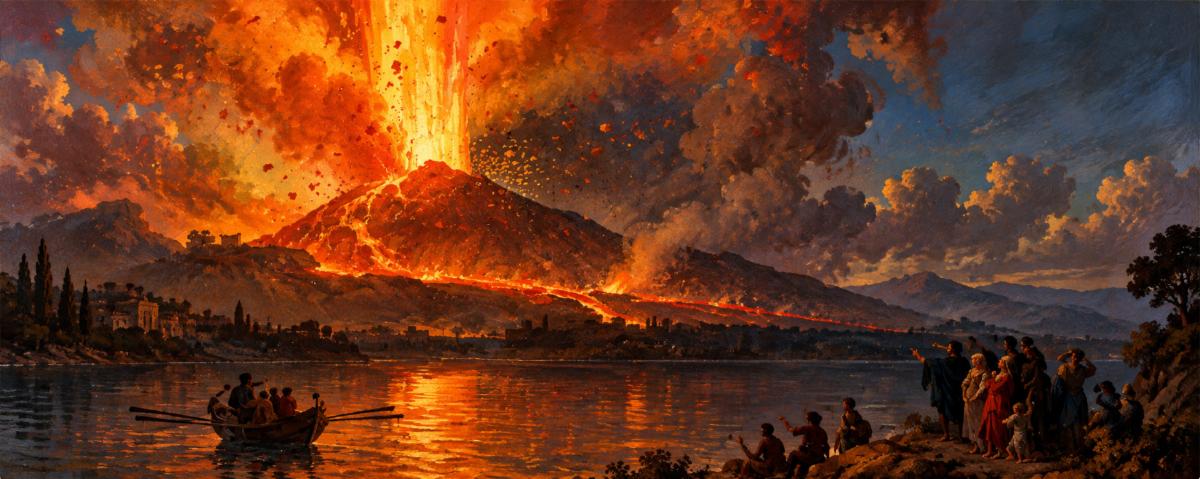
Two automobiles are available, either are capable of carrying you to safety. Unfortunately, both were manufactured by corporations whose policies you find morally objectionable.
WHAT DO YOU DO?
You could plant your feet upon Geralt’s principle—“evil is evil”—refuse both automobiles and disappear beneath the ashes. Or you could choose one of the two cars and live.
Getting into that automobile would not constitute an endorsement of the corporation that manufactured it. You would not be affirming its executives, embracing its values, or approving its corporate policies.
You would simply be making a prudential judgment among the alternatives actually available to you. That distinction is critical. Because choosing an imperfect option is not necessarily the same thing as choosing evil.
A VOTE IS NOT A CANONIZATION
We sometimes speak about voting as though entering a voting booth were equivalent to hanging a candidate’s portrait in the church sanctuary. It isn’t.
A ballot is not a confession of faith.
It is not an ordination certificate.
It is not a declaration that the candidate receiving my vote possesses every virtue I desire in a political leader. Voting is an act of political judgment exercised in an imperfect world.
Consequently, the question confronting the Christian voter is not necessarily: “Which candidate perfectly represents my convictions?” There may be no such candidate.
The more useful question is:
“Given the alternatives actually before me, what are the foreseeable consequences of each?”
That reframes the entire discussion.
There are, of course, actions Christians must never commit. Scripture does not permit us to do evil merely because we hope good will result. But voting for a flawed human being is not necessarily participation in that person’s flaws.
A vote for a candidate does not make me responsible for every foolish sentence he has uttered, every bad judgment he has made, or every position with which I disagree.
If it did, conscientious Christians could scarcely vote for anyone.
The Christian doctrine of human fallenness should have cured us long ago of expecting political messiahs.
MY HORSE LOST
I rode another horse in the primary. My candidate lost. Primaries allow us to advocate passionately for the person we believe would best serve. But elections eventually confront us with something less exhilarating than political idealism: a ballot.
And the ballot does not ask whom I wish had won. I cannot enter the voting booth in November and request a hand-crafted statue of my beloved but defeated candidate. I must deal with the candidates who remain.
In Oklahoma’s gubernatorial race, Mike Mazzei is the Republican nominee, Cyndi Munson is the Democratic nominee, and independent candidates will also appear on the November ballot.
The choices before us in November possess dramatic contrasts. One candidate favors abortion and one does not. One favors school choice and one does not. In the absence of my preferred candidate, there is much about which to think and to choose!
PROVIDENCE DID NOT END ON PRIMARY NIGHT
There is a temptation after a bruising primary to turn disappointment into moral absolutism.
Our candidate represented principle. Everyone else represents compromise. Our candidate was the statesman. Everyone else is merely political. Our candidate was the good choice. Therefore, choosing anyone remaining must mean choosing evil.
That conclusion does not necessarily follow. And refusing to choose does not transport us to some morally neutral territory above the election. Abstention is itself a choice with consequences.
We should not pretend that refusing to vote removes us from what follows.
Someone will govern. Laws will be signed. Officials will be appointed. Budgets will be adopted. Schools will be affected.
AND, MOST IMPORTANTLY, FAMILIES, CHURCHES, BUSINESSES, AND COMMUNITIES WILL LIVE UNDER THE CONSEQUENCES.
Christian political responsibility therefore requires more than cataloging the shortcomings of candidates. It requires sober consideration of what is likely to happen when political power is placed into particular hands.
My knight in shining armor may have fallen in the primary. Perhaps, in the providence of God, he was sent in another direction. But Providence did not end on primary night. |