|
At the World Economic Forum in Davos this January, President Donald Trump told a room of global elites something they rarely hear: “The explosion of prosperity and progress that built the West did not come from our tax codes; it ultimately came from our very special culture.”
Whatever one thinks of the messenger, the claim deserves a serious hearing. The most important debate in American life is not about tax rates or tariffs. It is about whether the United States still has a shared culture worth handing down, and whether we expect newcomers to join it.
For most of our history, the answer was yes. America called itself a melting pot. People arrived from every corner of the earth, and within a generation their children pledged allegiance to the same flag, read the same founding documents and claimed the same inheritance. E pluribus unum: out of many, one.
Multiculturalism reverses that motto. It treats the “many” as permanent and the “one” as optional. It asks schools and civic institutions to celebrate every culture except the one that built the country, which it regards with suspicion. A melting pot unites. Multiculturalism divides, and it does so by design.
| |
|
“
We should welcome newcomers into a culture confident enough to ask something of them.”
|
| Bob Linn |
| |
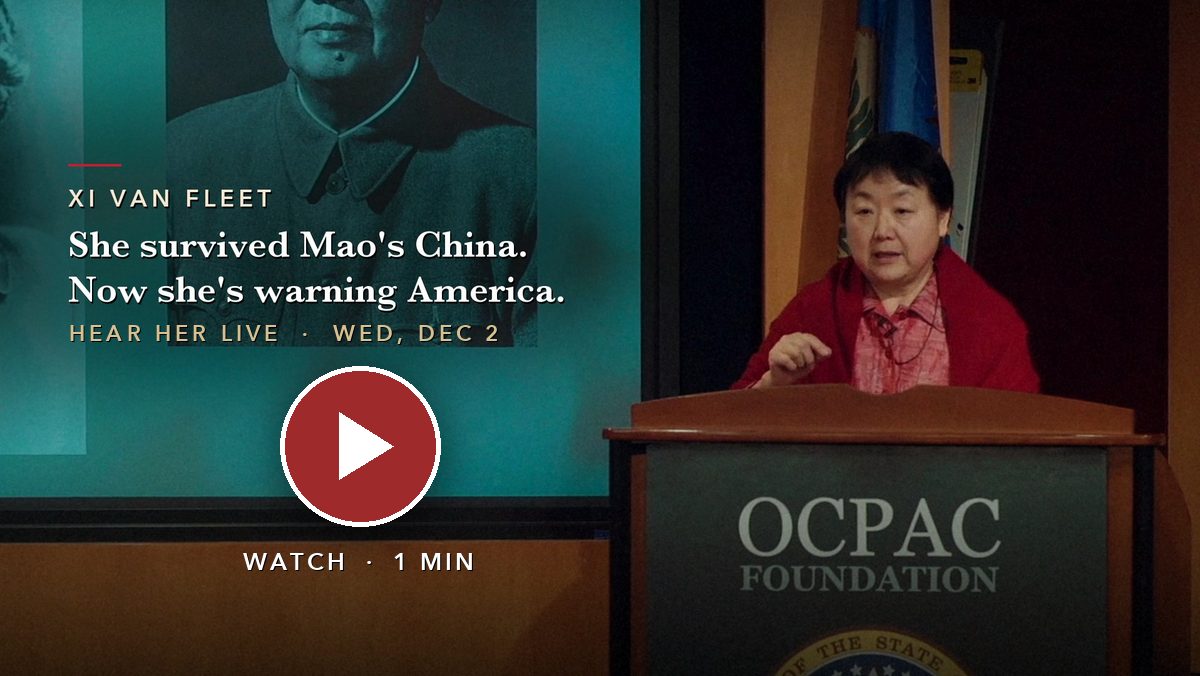
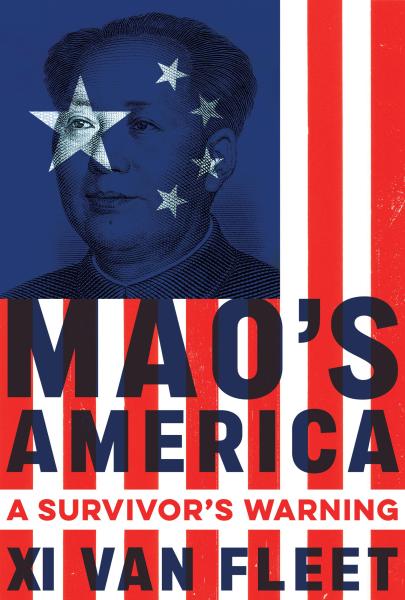
Few people make this case more powerfully than Xi Van Fleet. As a teenager in China, she was a true believer in Mao’s Cultural Revolution. She later immigrated to the United States, became a citizen and, in her bestselling book “Mao’s America,” warned that the ideas she escaped are taking root here. Van Fleet argues that “religious pluralism” is often polite cover for a less polite goal: moving Christianity out of its historic place at the foundation of Western civilization. She points to President Barack Obama’s first inaugural address, in which he said Americans are “shaped by every language and culture, drawn from every end of this Earth.”
That is true of our people. It is not true of our founding principles. The ideas that made America did not come from nowhere. Those ideas hold that every person bears the image of God, that rights come from the Creator rather than the state, and that rulers are themselves under law. They grew from the soil of the Bible and centuries of Christian thought. As theologian Joseph Boot puts it, a nation’s mindset “is not a ‘racial’ inheritance but a product of religion, and the culture that such a religion produces.” That distinction matters, because critics often caricature the defense of Western culture as a defense of race. It is the opposite. Christianity is the faith that declared there is “neither Jew nor Greek, slave nor free.”
Christian conviction drove William Wilberforce in Britain and the abolitionists in America to fight slavery, an institution practiced in nearly every civilization in history, as economist Thomas Sowell has documented. It was the Christian West that turned against it. What grew from that soil is a society where people of every background compete under the same rules, with equal opportunity but no guarantee of equal outcomes.
| |
|
“
If we want our children and our newest neighbors to become one people, we have to be willing to tell them that story again.”
|
| Bob Linn |
| |
Former Oklahoma House Speaker T.W. Shannon has made this argument for years: our Constitution and our free economy rest on a Christian foundation that belongs to every citizen, whatever their color.
Culture is about more than immigration. It is also about the family. German sociologist Gabriele Kuby warns, “As sex goes, so goes the family; as the family goes, so goes society.” A culture that teaches children they may redefine marriage, sex and even their own bodies at will is not liberating them. It is cutting them loose from the anchors every stable civilization has depended on.
None of this is an argument against immigrants. Xi Van Fleet is an immigrant, and she is among the most eloquent defenders of the American idea writing today. It is an argument for assimilation. We should welcome newcomers into a culture confident enough to ask something of them. Generous immigration and an expectation of becoming American have always gone together. They should again.
Nor is it an argument for a state church. The founders rightly rejected that. It is an argument for honesty about where our freedoms came from, and for the humility to admit that they will not outlast the faith and character that produced them.

An open book in an empty classroom. Illustration
Here in Oklahoma, that honesty starts in our classrooms. City Journal’s new college rankings, which weigh civics education and campus governance, scored 115 of the country’s most prominent schools on a 100-point scale. Not one scored above 80. Our university regents, local school boards and the State Board of Education have the authority to insist that Oklahoma students learn the history of Western civilization accurately and without apology, including the faith at its center.
A melting pot needs a fire. For two centuries that fire was a shared faith and a shared story. If we want our children and our newest neighbors to become one people, we have to be willing to tell them that story again.
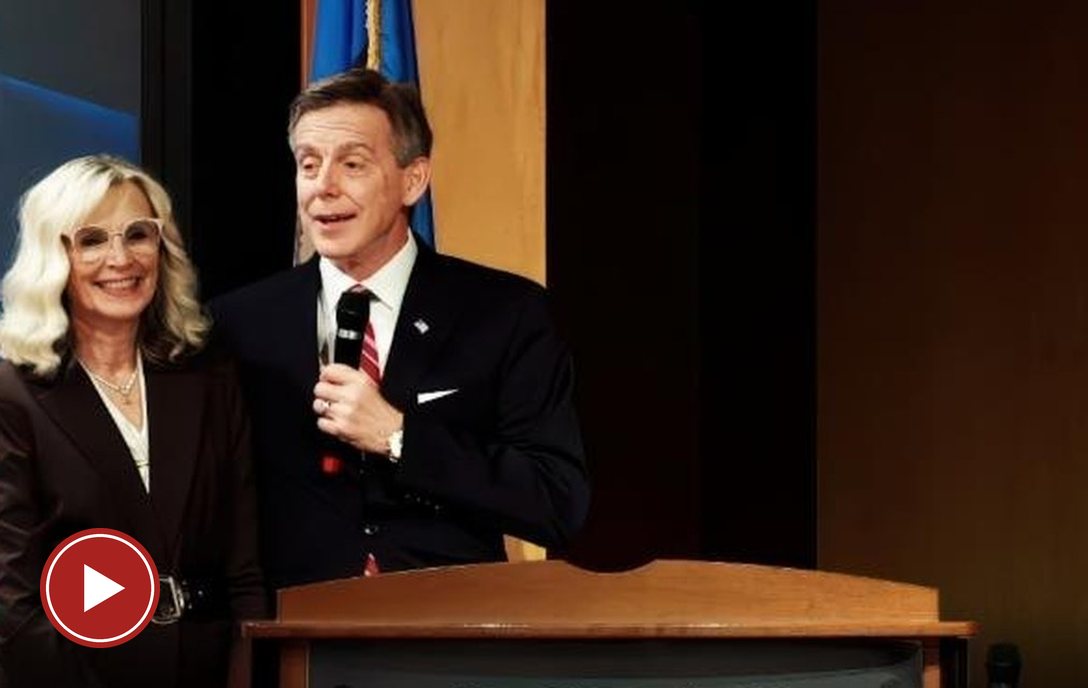
Bob Linn is President of the OCPAC Foundation, which hosts Xi Van Fleet at the Oklahoma History Center on December 2.
|